My child has a rash - how do I know if this one is dangerous?
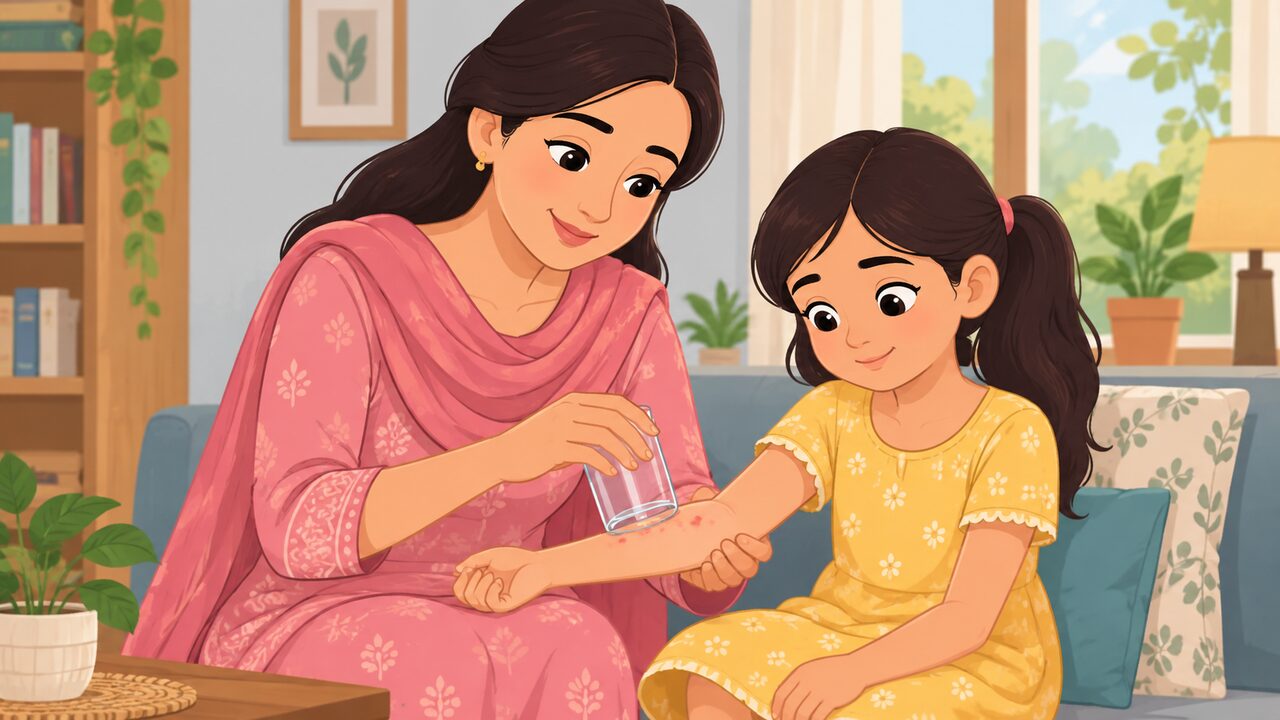
Quick answer: Most childhood rashes are part of a harmless viral illness and pass in days. The dangerous one to learn tonight: purple or dark-red spots that do not fade when you press them (press a clear glass against the skin to check). Purple spots plus fever is a life-threatening bloodstream infection until a doctor proves otherwise - go to the ER now. The same goes for widespread blisters, or any rash on a child who looks very sick.
🟢 GREEN - You can usually watch at home when
- Small pink spots on both sides of the chest, stomach and back in a child who is otherwise well - eating, drinking, playing. Viral rashes like this usually last 2-3 days.
- A rash that appeared as the fever ended after 3-5 days of high fever, in a child who is now cheerful - a classic, harmless pattern in babies and toddlers.
- Any rash that fades (turns white briefly) when you press it, in a child who is well.
🟡 YELLOW - Call your paediatrician today if
- Any widespread rash that comes with fever - the AAP's rule is that all widespread rashes with fever need to be seen and diagnosed, because some serious infections announce themselves this way.
- A red, rough, sandpaper-feeling rash spreading over the body - can come with a strep throat infection and needs treatment.
- Rash with red eyes, runny nose, cough and fever in a child not fully vaccinated - measles is resurging in unvaccinated children.
- Itchy raised wheals (hives) without breathing trouble or swelling - see also our guide on allergic reactions.
🔴 RED - Go to the emergency room NOW if
- Purple, dark-red or blood-coloured spots or dots that do not fade when pressed - with or without fever. Do the glass test: press a clear glass firmly on the spot; if the colour stays, go now.
- Widespread purple patches anywhere on the body - always an emergency.
- Widespread blisters or peeling skin, especially with sores in the mouth or eyes.
- Any rash on a child who is drowsy, confused, breathing fast, or looks very sick.
- Rash with swelling of lips, tongue or face, or any breathing difficulty or hoarse voice - this can be a severe allergic reaction: call 108 (see our anaphylaxis guide).
🆘 SOS - What to do while you get help
- Call 108 if your child is very sick, or take them straight to the ER.
- Keep your child cool and do not bundle them up - fever with a dangerous rash makes children hotter and more uncomfortable.
- Note when the fever started, when the rash appeared, and where it started - doctors use this timeline.
- Bring any medicines your child has taken in the last days, including fever medicine and antibiotics - some rashes are drug reactions.
❌ DO NOT
- Do not apply creams, powders, oils or home remedies over an undiagnosed rash - they change what the doctor needs to see.
- Do not give aspirin to a child with fever and rash - it is unsafe for children.
- Do not send a child with an undiagnosed fever-rash to school or a relative's home - some of these illnesses spread.
- Do not wait for the rash to "declare itself" when the spots are purple - the serious infections behind purple spots move in hours.
What is happening and why
Skin spots tell two different stories. Pink spots that blanch white under pressure are dilated blood vessels - the ordinary stuff of viral illness. Purple spots that stay purple under pressure are blood that has leaked out of the vessels into the skin, and in a child with fever the AAP treats that pattern as a bloodstream infection called meningococcemia until proven otherwise - an infection that can go from first spot to critical in hours.
The glass test takes ten seconds and needs no equipment: press, look, decide. When in doubt, press the glass - and if the spot stays coloured, go.
This page is for first-aid education and does not replace examination by a doctor. In an emergency, call 108 or 112.
Sources (last checked 13 Sep 2026)
- AAP KidsDoc Symptom Checker, "Rash or Redness - Widespread" (petechiae and purpura = bleeding into the skin; purple spots with fever = life-threatening until proven otherwise; don't fade when pressed; all widespread rashes with fever need to be seen) - www.healthychildren.org/English/tips-tools/symptom-checker/Pages/symptomviewer.aspx?symptom=Rash+or+Redness+-+Widespread
Approved for publication by Dr Anjana Alekhya, MD (Paediatrics) · Based only on AAP/IAP guidance · Published 13 September 2026