My child fainted - when is fainting a heart warning?
Quick answer: Most faints in children and teens are simple faints - a brief drop in blood flow to the brain from standing long, heat, hunger or a fright - and the child is fully normal within a minute or two. The faints that need urgent evaluation are the ones during exercise, with a racing or irregular heartbeat, with chest pain, or in a family where someone died suddenly young. A child who does not wake within a minute or has a seizure needs 108.
🟢 GREEN - The common simple faint
- Your child fainted after standing for a long time (assembly, a queue, a ceremony), standing up suddenly, standing in heat, skipping a meal, or a scare or the sight of blood.
- They looked pale just before, were out for under a minute, and woke quickly, fully themselves - remembering everything, walking and talking normally.
- This pattern accounts for almost all childhood faints, and simple fainting causes no long-term problems.
🟡 YELLOW - Call your paediatrician today if
- It was your child's first faint without an obvious trigger.
- Faints are recurring - even with clear triggers, a pattern deserves a look.
- Your child has been dizzy on standing repeatedly, or has headaches or tiredness alongside.
- Your child takes any regular medicines - some can cause fainting.
🔴 RED - Seek emergency care NOW if
- Your child fainted during exercise or running - fainting with exertion needs a heart evaluation, urgently.
- The faint came with a racing, pounding or irregular heartbeat, or chest pain.
- There is a family history of sudden death at a young age, or known heart rhythm problems.
- Your child did not wake within a minute, is confused afterwards, had a seizure, or was injured in the fall.
- Your child is blue, breathing abnormally, or has fainted more than once in a day.
🆘 SOS - What to do in the moment
- Catch or lower your child to the floor - do not try to hold them upright.
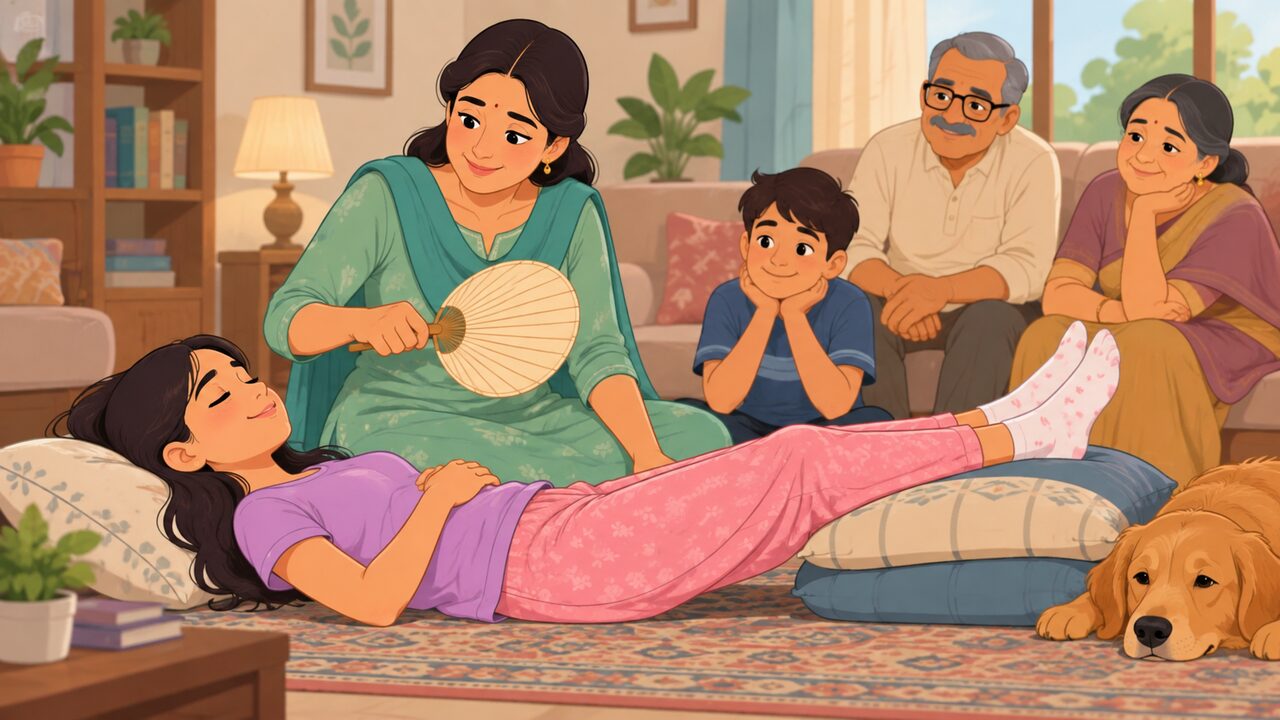
- Lay them flat and raise their legs on a bag or cushion - blood returns to the brain and most children wake within a minute.
- Loosen anything tight at the neck, and give them fresh air and space - crowds block both.
- Check they are breathing normally. If not breathing normally and unresponsive, start CPR and call 108.
- Once fully awake, let them lie 10-15 minutes, then give water or juice and something to eat. Get them up slowly - a fast stand can cause a second faint.
❌ DO NOT
- Do not splash water on their face, slap them, or shake them awake.
- Do not give anything to eat or drink until they are fully awake.
- Do not let them stand up immediately after waking - get up gradually.
- Do not dismiss a faint during sports as "just the heat" - exertional fainting gets a heart check first, reassurance after.
What is happening and why
A simple faint is plumbing, not electricity: stand long enough with locked knees and blood pools in the legs, the brain is briefly under-supplied, and the body solves it by lying itself down. That is why the pale-before, quick-wake, fine-after pattern is so reassuring - and why lifting the legs is the entire treatment.
The heart-caused faints are rarer but are the ones that matter, and they advertise themselves: they happen during exercise (when a rhythm problem has its chance), come with palpitations or chest pain, or run in families with sudden young deaths. The AAP's fainting guidance treats every one of those patterns as needing a cardiac work-up - a simple ECG and examination catch most of the dangerous causes.
This page is for first-aid education and does not replace examination by a doctor. In an emergency, call 108 or 112.
Sources (last checked 13 Sep 2026)
- AAP KidsDoc Symptom Checker, "Fainting" (98% of teen faints are simple; fainted during exercise or with racing heart = ER; cardiac syncope rare but needs work-up) - www.healthychildren.org/English/tips-tools/symptom-checker/Pages/symptomviewer.aspx?symptom=Fainting
- AAP, "Dizziness and Fainting Spells in Children" - www.healthychildren.org/English/health-issues/conditions/head-neck-nervous-system/pages/Dizziness-and-Fainting-Spells.aspx
Approved for publication by Dr Anjana Alekhya, MD (Paediatrics) · Based only on AAP/IAP guidance · Published 13 September 2026