My child is burning up after being out in the heat - heat exhaustion or heatstroke?
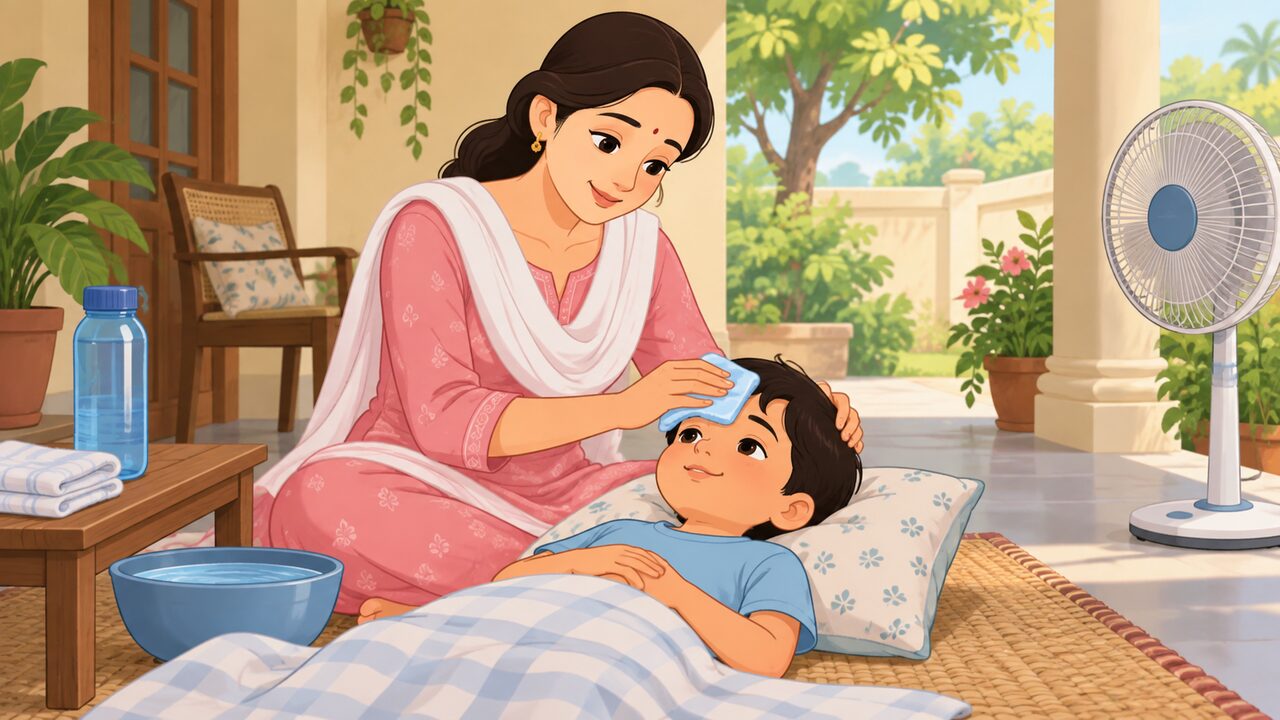
Quick answer: Move your child to a cool place and start cooling them now - shade or indoors, remove extra clothing, sponge or shower with cool water. If they are sweating, tired, dizzy or nauseated but fully alert, that is heat exhaustion: cool them, give sips of water, and watch for an hour. If their temperature is 39.5°C (103°F) or more, their skin is red, hot and dry, or they are confused, vomiting, having a seizure or unconscious - that is heatstroke: call 108 and keep cooling them the whole time you wait.
🟢 GREEN - Heat cramps and mild heat exhaustion - manage at home
- Muscle cramps in the legs during or after play in the heat: rest in a cool place and give fluids; wait several hours after the cramping stops before any more activity.
- Sweating heavily, tired, dizzy, headachy or nauseated but fully alert: move to a cool place, loosen clothing, cool bath or sponging, and small frequent sips of water or an oral rehydration drink.
- Watch for one hour - a child who keeps improving is recovering.
🟡 YELLOW - Get medical care today if
- Symptoms worsen or continue after one hour of cooling and fluids - untreated heat exhaustion can progress to heatstroke.
- Your child vomits and cannot keep fluids down, or is too tired to drink.
🔴 RED - Call 108 NOW and start cooling immediately if
- Body temperature 39.5°C (103.1°F) or higher with heat exposure.
- Skin that is red, hot and dry (sweating may have stopped).
- Confusion, bizarre behaviour, slurred speech, staggering - the brain is overheating.
- A seizure, or any loss of consciousness.
- A rapid, strong pulse with throbbing headache and nausea after heat exposure.
🆘 SOS - Cooling a child with heatstroke while help comes
- Call 108 first, then cool aggressively: get cool water on the skin - a bathtub or shower, a sponge bath, or a hose; in dry heat, a cool wet sheet wrapped around the body works too.
- Fan your child while the skin is wet - evaporation pulls heat away fastest.
- Take the temperature every 5 minutes and keep cooling until it reads 38.9°C (102°F) or less.
- If a seizure starts, turn the head to the side and clear hard objects away - never put anything in the mouth.
- If vomiting, keep the head turned to the side so the airway stays open.
❌ DO NOT
- Do not give a confused or drowsy child anything to drink - it can enter the airway.
- Do not give fever medicines - heatstroke is not a fever and paracetamol does nothing for it.
- Do not use ice baths for a child at home - cool water, used immediately, is the AAP's advice; the goal is fast, steady cooling, not shocking the body.
- Never leave a child in a parked car, even for a minute and even with windows open - car interiors reach lethal temperatures within minutes in Indian summers.
- Do not wait for sweating to stop before acting - treat the child in front of you.
What is happening and why
Children overheat faster than adults: they produce more heat per kilogram, sweat less efficiently, and depend on adults to notice and act. Heat exhaustion is the body's warning stage - the cooling system is working flat out (heavy sweating, weakness, nausea). Heatstroke is the stage where that system fails: the body's thermostat malfunctions, temperature can soar past 40.5°C (105°F) within ten to fifteen minutes, and the brain begins to cook - hence the confusion and seizures. It is potentially deadly, and the treatment that changes the outcome is not a medicine but immediate cooling started by whoever is there.
Prevention in Indian summers is unglamorous and effective: play before 10 am and after 4 pm, water breaks every 20 minutes of outdoor play, light cotton clothing, and never, ever a child left in a parked car.
This page is for first-aid education and does not replace examination by a doctor. In an emergency, call 108 or 112.
Sources (last checked 13 Sep 2026)
- AAP, "Heat-Related Illnesses" (heat cramps, heat exhaustion, heatstroke definitions; 103.1°F threshold; call EMS and cool; cooling to 102°F; seizure and vomiting advice) - www.healthychildren.org/English/health-issues/injuries-emergencies/sports-injuries/Pages/Heat-Related-Illnesses.aspx
- AAP, "Protecting Children from Extreme Heat: Information for Parents" - www.healthychildren.org/english/safety-prevention/at-home/pages/protecting-children-from-extreme-heat-information-for-parents.aspx
Approved for publication by Dr Anjana Alekhya, MD (Paediatrics) · Based only on AAP/IAP guidance · Published 13 September 2026