My child had a seizure - what should I do in the first five minutes?
Quick answer: Stay calm, protect your child from injury, and time the seizure. Lay them on their side, move hard or sharp objects away, cushion their head, and put NOTHING in their mouth. Most seizures stop on their own within a minute or two. If it lasts more than 5 minutes, call 108.
🆘 SOS - What to do right now, step by step
- Note the time. How long the seizure lasts changes what happens next.
- Move hard, hot or sharp objects away. Cushion your child's head with something soft.
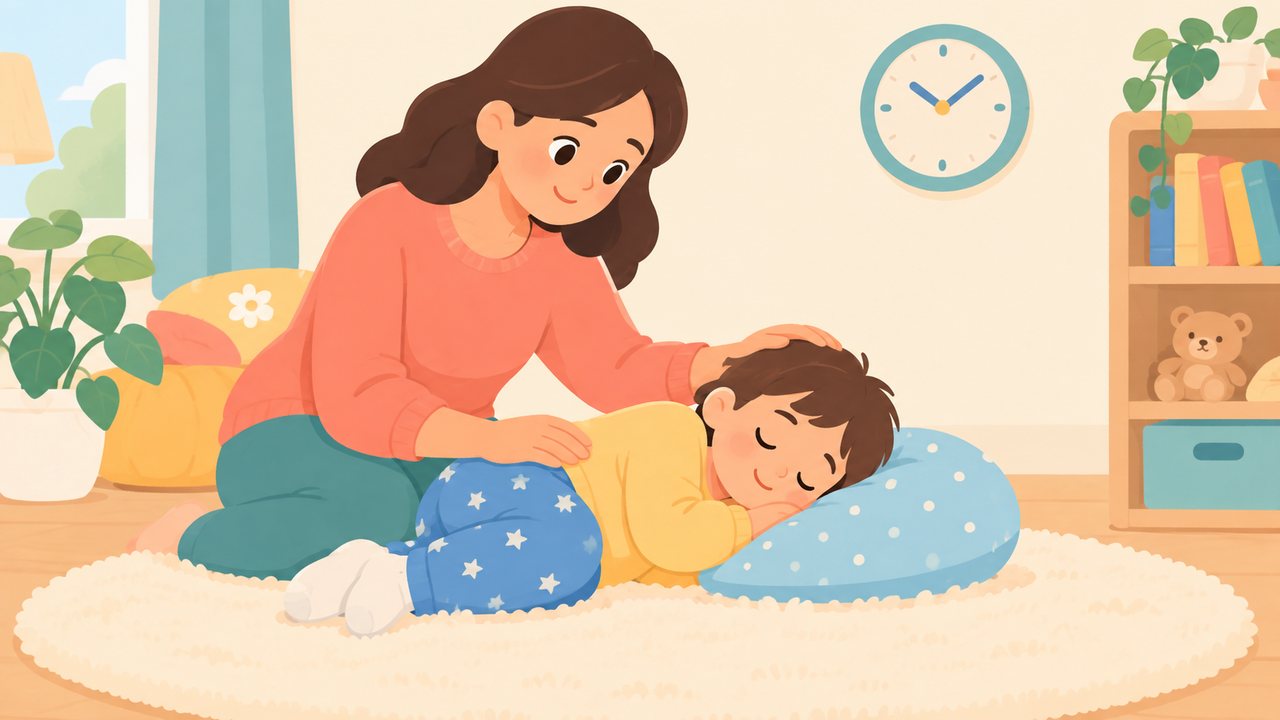
- Lay your child on their side so saliva or vomit drains out of the mouth.
- Loosen anything tight around the neck. Stay with your child and speak gently.
- When the shaking stops, let your child rest on their side. They may be sleepy or confused for a while - this is normal.
❌ DO NOT
- Do not put anything in your child's mouth - no spoon, no finger, no cloth, no iron key, no onion. A child cannot swallow their tongue, and objects in the mouth break teeth and block the airway.
- Do not hold your child down or try to stop the shaking.
- Do not give water, milk or medicine by mouth during or just after the seizure.
- Do not splash water on the face or make the child smell strong substances.
- Do not leave your child alone.
🔴 RED - Call 108 / go to the ER NOW if
- The seizure lasts more than 5 minutes, or another seizure starts before your child wakes up.
- Your child has trouble breathing or stays blue after the seizure.
- Your child does not wake up normally after the seizure.
- The seizure followed a head injury, or happened in water.
- Your child is under 6 months old.
- Your child has a fever with a stiff neck, a non-blanching rash, or repeated vomiting.
- Your child has diabetes and you suspect very low blood sugar.
- It is the first seizure your child has ever had - they need a medical check the same day even if they recover fully.
🟡 YELLOW - Call your paediatrician today if
- The seizure lasted less than 5 minutes, happened with a fever in a child 6 months to 5 years old, and your child is now completely back to normal. This is likely a febrile seizure - frightening, but almost always harmless. Your doctor will want to examine your child to find the cause of the fever.
🟢 GREEN - You can usually watch at home when
- Only after your doctor has seen your child, confirmed febrile seizures, and told you what to do next time - then a brief, typical seizure with quick recovery can be managed at home along the plan your doctor gave you.
What is happening and why
A seizure is a burst of abnormal electrical activity in the brain. In children 6 months to 5 years, the commonest cause is a febrile seizure, triggered by a fast-rising fever: 3 to 4 out of every 100 children have one, most often around 12 to 18 months. During it, the child may stiffen, twitch, roll their eyes, and be unresponsive for a short time; it usually lasts under a minute or two. Febrile seizures look terrifying but do not cause brain damage, and most children outgrow them by school age. Fever medicines make the child comfortable but do not prevent febrile seizures. The reason doctors want to see the child afterwards is not the seizure - it is to find and treat what caused the fever, and to be sure the seizure was truly a simple febrile one.
This page is for first-aid education and does not replace examination by a doctor. In an emergency, call 108 or 112.
Sources (last checked 13 Sep 2026)
- AAP, "Febrile Seizures in Children" - www.healthychildren.org/english/health-issues/conditions/fever/pages/febrile-seizures.aspx
- AAP, "Fever and Your Baby" - www.healthychildren.org/English/health-issues/conditions/fever/Pages/Fever-and-Your-Baby.aspx
Reviewed and approved by Dr Anjana Alekhya, MD (Paediatrics) · Published 13 September 2026